
You couldn’t blame David Sarnoff if he mumbled some uncomplimentary comments at the F.C.C. in May of 1940.
The Commission made two rulings, basically telling Sarnoff if RCA wanted to force an NBC monopoly on television, it wasn’t going to happen.
First, it re-allocated the air waves to accommodate F.M. That meant NBC would have to move W2XBS in New York off its channel (the same decision affected Don Lee’s W6AXO in Los Angeles and Zenith’s W9XZV in Chicago, though an AP story from May 27 said only NBC and Don Lee were on the air). Then it reaffirmed a decision to pretty much ban commercial television until transmission standards were standardised. RCA and its allies had one system, while DuMont had developed another one. Both were trying to sell television their sets. And the Commission also said it would open up more cities for television. In other words, to companies other than RCA.
NBC modified its schedule this month, ending Sunday broadcasts, and operating Tuesday through Saturday, with a live remote on Saturdays. W2XBS gave up baseball for horse racing. Its 16 mm. camera was doing a lot of unspooling; the schedule is full of cartoons from the defunct Van Beuren studio.
There’s incomplete information available about W6XAO. The
Pasadena Post was the only paper that published a schedule and it was only for daytime broadcasts. Newspapers gave bits and pieces of information about the station’s evening programmes. In fact, one appliance store was open at night to allow people to come in and watch W6XAO broadcast sports. The daytime schedule looked like this:
Tuesdays and Wednesdays, 3:00—Films.
Thursdays, 3:00—Round Table, films.
Saturdays, 5:30—Film, Discussion.
The only exception in May was Tuesday the 28th, when an interview at 2:30 p.m. was added to the schedule, though there are hints in one newspaper story of live programming. Nelson McEdward worked at the station and contributed this on W6XAO’s programming to the “Television” column in the June 1940 edition of
International Photographer magazine:
 Thomas S. Lee's mobile unit W6XAO has been telecasting the baseball games at the Gilmore Stadium on Saturday and Sunday afternoons, with great success. Last Sunday was the only time in our outdoor broadcasts where we had a decent break in the light. On Monday and Friday nights Station W6XAO televises the wrestling and boxing matches at the Legion Stadium. Ray Coffin, W6XAO's talent scout and 24-hour-a-day man, stated that one could see the hair on the legs and very clear facial expressions on the wrestlers as they were throwing each other's noses and ears about the stadium. He was "seeing-in" on the Gilfillan receiver installed at the Brown Derby. Bob Gregory smashed Yukon Jake's face so bad it looked like a raw beefsteak. Gregory is a clean fighter and fine gentleman. I will televise him at W6XAO in a few weeks. Our new 24-inch lens is an added improvement on these telecasts. Dwight Warren and I bumped into Norman Taurog, Hollywood veteran and an old time friend, at the fights the other night and he was very much interested in the telecasting of the matches.
Col. Nix, the kindly 79-year-old gentleman who fired the first shot allowing the settlers new land grants in Oklahoma in the early '70's, was telecasted last night again and is a remarkable character. The members of my staff at W6XAO who so faithfully stay with these telecasts are Dwight Warren, Hatto Tappenbach and John Polito, operative cameramen; Bill Collins and Keva Marcus, assistants. All but Marcus, who is a member of Local 644, are members of Local 659, IATSE. From Local 728, handling studio set lighting, are Tom Fay, Ralph Slater and Eric Wybrow.
In the May issue, McEdward described the technical issues for W6XAO to broadcast matches at the Legion:
The camera was placed in the rear of the stadium up high with the telephoto which covers nearly all the ring. The lights were not bad but Otto K. Olsen is rigging up some more for better results. I will have a telephoto lens about 30 feet from the ring for a close angle, and hope the wrestlers don’t throw each other in my lap as they near did before.
However, with maybe 300 sets in the Los Angeles area at the time, W6XAO didn’t warrant a lot of publicity. The NBC station in America’s biggest city got most of it. Below are listings for W2XBS in New York and selected stories about American television for the month.
WEDNESDAY, May 1, 1940
3:00-5:00—Baseball: N. Y. U. vs. Manhattan, at Ohio Field.
6:45-7:00—News, Lowell Thomas.
8:30-10:30—First anniversary television celebration, with Diosa Costello, dancer; Hildegarde, singer; Gertrude Berg in “The House of Glass,” drama; Pages and Guides minstrel show; fashion show; “Harlem Highlights,” with Avis Andrews and the Berry Brothers; “The Ugly Duckling,” a Walt Disney cartoon, etc.
Television Review
Reviewed Wednesday, 8:30-11 p.m. Style—Variety and dramatic, using live talent and film. Reviewed on RCA television receiver. Station—W2XBS.
On Wednesday (1) NBC presented its Television Birthday Party, occasion being in celebration of one year of regular telecasting. Scheduled for two hours, program lasted two and one-half hours, and talent ranged from bad to very good. Significant thing in the layout was that it held interest fairly well despite its unusual length. Session started with a brief talk by Dr. Alfred H. Morton, NBC vice-president in charge of television, and included a raft of vaude and night club acts, a drama, a cartoon by Walt Disney, ballet dancing, opera singers, a fashion show and a minstrel show presented by the NBC page boys.
Definition and use of camera was generally good on this program, as was the lighting, but sometimes performances ended with a certain flat quality. It’s quite possible that applause would remedy this to a great extent and provide better working conditions for the performers. Comics, particularly, would show up better under such circumstances.
From standpoint of popular appeal, best items in the show were the singers, including Hildegarde, Avis Andrews and Peters Sisters; the Berry Brothers, eccentric dancers; a play by Gertrude Berg, The House of Glass, and Walt Disney’s great cartoon, The Ugly Duckling. Disney opus came over with amazing clarity. The Berg play, too, was particularly well adapted for tele, being written originally for television. It had a small cast, few scenes and its action was kept well within the compass of the camera. A few film clips were cut into the presentation.
Fashion show was given by Frances Hawks, of Franklin Simon, in conjunction with Lentheric, perfume manufacturer. Angle of the tie-up was to mention and show bottles of perfume which complemented certain fashions.
Minstrel show by the page-boys was not so good, but one of the admirals.
Casper Kuhn, did a very capable imitation of Waiter Winchell and looked as tho he could do an emsee job.
Emnsee was Ray Perkins, just fair. Ray Forrest announced. Ackerman. (Billboard, May 11)
‘MILESTONE IN TELEVISION’
With Ray Perkins, Alicia Markora, Anton Delia, Avis Andrews, Hildegarde. Gertrude Berg, Annamary Dickey. Leonard Warren, Berry Bros., Peters Sisters, NBC Minstrels.
RCA-NBC, New York.
This lengthy telecast, marking the elapse of one year since regularly scheduled programs began, established pertinent points on how far sight-sound broadcasting has progressed. One angle was that after-dinner speakers, who go across at banquets, often click as well on television. Alfred H. Morton, NBC vice-president for television, proved this, his personal appearance coming through well. Ray Perkins, m.c., clicked nicely with ad libs and piano-ballading as in radio.
Alicia Markova and Anton Dolin, ballet dancers, also gave the favorable side of new medium. Television camera’s ability to shift from one terp artist to the other, move from closeup to distance shots and catch twinkling toes, said much for the improvement over a year ago.
Fashion revue, blatantly a plug for a N. Y. women’s store and a perfume concern, illustrated a weakness of telecasting to date—dull movement of models with a fashion stylist reading equally dull patter. Hint here, too, of how obnoxious commercial plugs might become when television is commercialized.
Negro entertainment, introduced by Avis Andrews of Kit Kat Club, revealed the future need for careful pruning of performer time. Miss Andrews, admittedly good in her first song, could have trimmed her second and eliminated the third. Same true of Berry Brothers, three eccentric dancers, Three Peters Sisters had the identical failing — too much. Clyde Hart, pianist, did one specialty.
Annamary Dickey and Leonard Warren two younger members of the Met Opera, in contrast, offered their pet songs and bowed off. Edward Johnson, director of the Met association, introduced pair.
‘The Ugly Duckling,’ prize winning Walt Disney short. Showed that cartoons may have a future. Line drawings were more impressive than some live talent on show.
Hildegarde not only proved photogenically perfect for television but her personality went as well as at a swank hotel.
Production of ‘House of Glass’ sketch, prepared particularly for television, indicated what might be accomplished with radio serials when sight-sound broadcasting becomes general. Gertrude Berg’s playlet registered Impressively as it had done in the past on airway programs.
Minstrel show of NBC pages and guides sized up well considering amateur talent. Wear. (Billboard, May 15)
NEW YORK, April 27.—National Broadcasting Co. is preparing a television production, titled “21 Men and a Girl.”
Understood the production will use NBC page boys as singers, and breaks in May 1.
Marcia Harris, vaude singer and dancer, will be the girl, Joining the May 13 program from the studio and the May 10 program from the stage of the Ritz Theater. (Billboard, May 4)
THURSDAY, May 2, 1940
3:30—“Oriental Odyssey,” film travelogue.
4:00—“Pleasure Time,” film musical with Fred Waring Pennsylvanians.
4:20—“Let’s See America,” film travelogue, and/or “The Burning of Canton,” Chinese war film.
6:45-7:00—News, Lowell Thomas.
8:30-9:30—“Out of the Kaleidoscope,” variety hour, with Helen Morgan, songs; Frank Eliscu in “You’re an Artist”; Senor Wences, novelty act; Poldi Mildner, piano; “Maid of Cotton,” interview, and Geraldine and Joe, comedy dancers.
FRIDAY, May 3, 1940
3:30—“The Last of the Mohicans,” film serial, episode II.
3:50—“Tiger, Tiger,” animal hunt film.
4:00—“Let’s Sing,” musical film.
4:10—“Willie, the Worm,” 1938 film cartoon.
4:15—“Master of the Camera,” film on Edward Steichen’s methods.
4:25—“Springtime in Australia,” film travelogue.
8:30—Esso Television reporter.
8:45—”The Artist as Reporter,” with John Sloane, artist.
9:00-11:00—Boxing, Buddy Baer-Nathan Mann, Madison Square Garden. Jack Fraser announcer. Sponsored program.

SATURDAY, May 4, 1940
3:30-5:30—Baseball: Fordham vs. Villanova, at Fordham Field.
7:30-9:50—
“The Bat Whispers,” 1930 United Artists mystery film with Chester Morris, Una Merkel.
The Chicago office of the National Broadcasting company yesterday announced a new American record for long distance television reception. Images flashed from station W2XBS, atop the Empire State building in New York City, were picked up at the NBC office here, 717 air miles distant, on Thursday night [2].
“After a few moments of unrecognizable patterns on the receiver screen,” the broadcasting company said, “the image cleared. The sound portion of the program was very good, but the image gradually faded. Both sound and image completely disappeared after 16 minutes altho the program continued in New York for 11 more minutes.” (Chicago Tribune, May 4)
SUNDAY, May 5, 1940
3:30-4:35—Film, “Cipher Bureau.” with Leon Ames and Charlotte Winters.
8:30-9:30—Comedy, “Three Wise Fools,” by Austin Strong, with Percy Kilbride, Stephen Courtleigh, James Craven and Betty Furness.
At least 3,000 television sets are “looking in” on the New York air, according to the National Broadcasting Company. As the basis of count, it is pointed out that 2,000 program cards are mailed weekly to homes equipped with tele-radios. It is believed that this mailing list reaches from one-half to two-thirds of the set owners. In addition cards are mailed to 110 restaurants and taverns which have television sets in the New York area served by the telecasts from the Empire State Building’s aerial. (Times, May 5)
TUESDAY, May 7, 1940
For the first time in history, actual scenes of a motion picture company making a production were televised last over Station W6XAO under the supervision of Thomas S. Lee, head of the Lee Broadcasting System, from RKO studio.
Subjects chosen for the initial picture—making telecast were two sequences from “Dreaming Out Loud,” which Jack Votion and Sam Coslow are producing for RKO with Lum and Abner, Irving Bacon and Bobs Watson [sic] appearing. As a standard sound camera photographed the regular takes, twin telecameras were used to transmit the complete record of preliminary dressing activity, rehearsals and okayed shots to 1100 television receiving sets within a 35-mile radius of W6XAO. A wide angle unit of the television twins picked up the general action while, for the close-ups, a telephoto unit was used.
A dipper-shaped cathode-ray tube in the television camera head changed the light into sound and shot the impulses by cable to a ten-foot antenna atop the highest building on the lot to the base transmitter at Seventh and Bixel streets.
While noise interference created by the curious crowd of spectators present on the stage hampered sound reproduction, immediate reproduction of the screens shot were sharply and clearly reflected on miniature glass screens in the rear of the camera auxiliaries.
Telephone reports coming in both to RKO studio and the W6XAO offices indicated that viewers of the television version were highly pleased with what they had seen.
Through the courtesy of Votion, Coslow and Lee, a special showing of the broadcast was presented at the Hollywood Brown Derby on an 8½ by 9½ inch screen. Here the results proved to be only fair, but gave assurances that, with better transmission of sound and images in future tests, practical television may not be such a long way off. (Hollywood Reporter, May 8)
ACTUAL scenes of a motion picture company making a production were televised May 7, 8:30-9:30 p. m. over W6XAO, under supervision of Thomas S. Lee, president of Don Lee Broadcasting System, Los Angeles, from the RKO studios in Hollywood. Subjects chosen for the initial picture-making telecast were two sequences from “Dreaming Out Loud,” which Voco Productions is producing with Lum & Abner, Irving Bacon, Bob Watson and Sheilah Sheldon.
As a standard sound camera photographed regular takes, twin telecameras were used to transmit the complete record of preliminary dressing activity, rehearsals and okayed shots to 1,100 television receiving sets within a 35-mile radius of W6XAO. A wide-angle unit of the television twin cameras picked up the general action, while, for closeups, a telephoto unit was used.
A dipper shaped cathode-ray tube in the television camera head converted the light waves and shot the impulses by cable to a 10-foot antenna atop the highest building on the RKO studio lot to the base transmitter of W6XAO in downtown Los Angeles, six miles away.
While noise interference created by the crowd of spectators present on the stage hampered sound re-production, immediate television reproduction of the scenes shot were sharply and clearly reflected on miniature glass screens in the rear of the camera auxiliaries. (Broadcasting, May 15)
 RCA’s new system of large-screen television was given its first public demonstration May 7 at the company’s annual stockholders’ meeting, held in one of the larger NBC studios and attended by some 400 persons. Program, featuring stars of opera, symphony, stage and radio, was projected by a laboratory model instrument on an ordinary moving picture screen, producing images 4½ x 6 feet in size that were comparable to home television reception in quality.
Asked why the increase in size did not cause a diffusion in the images, which were broadcast on the RMA standard of 441-line definition, comparable to the diffusion that accompanies magnification of a half-tone reproduction, RCA engineers explained that as the size of the image was increased, the size of the spot made by the beam of electrons scanning the picture was also increased, with the result that the large-screen pictures were as good as the smaller images viewed on a regular home receiver, with the scanning lines just as invisible. Too much increase in the size of the scanning spot would cause a loss of definition in the image, it was explained, but experiment located the happy medium at which no lines are visible nor is there any decrease in definition.
How It Is Done
While the unit was built as an intermediate step in developing apparatus for projection of larger images, suitable for use in motion picture theatres, the present size has “interesting possibilities for use in clubs, schools and other similar places where the viewing group numbers from 100 to 150 persons,” RCA reports. There are no immediate plans for marketing this apparatus, it was stated, and from a year to 18 months would be required for its commercial development.
Projection optics of extremely wide aperture, a kinescope capable of high-voltage operation, using 56,000 volts as compared with the 6,000 or 7,000 volts used by the kinescope in an ordinary home receiver, and apparatus suited to those conditions are said to be the basic elements of the new system. The image on the face of the kinescope, where it measures only 2.4 by 3.2 inches, faces not toward the screen but in the opposite direction, being thrown upon a concave mirror surface 16 inches in diameter. The mirror collects the strong light from the kinescope and magnifies the image 22½ times; the magnified image is then projected back through a glass lens surrounding the neck of the kinescope and thence 20 feet through space to the screen.
Signals are received at the Kinescope either through the air as broadcast or by direct wire line. Both methods were employed during the demonstration, with no noticeable difference in the resultant images on the screen. (Broadcasting, May 15)
New York. — Stating that it has arranged with a group of theatres (not named) on the Pacific coast to reproduce television programs, the Don Lee System, owner of W6XAO, has filed a brief with the FCC asking immediate full commercialization of the new entertainment. The brief states that the arrangement with the theatres was made as a result of the FCC order of February 29 allowing limited commercialization an order that was later rescinded.
The brief states that the arrangement with the theatres will permit a program expenditure of from $18,000 to $20,000 a week and that the programs would be available to all television receivers as well as those in the theatres. Also, Lee’s brief says several advertisers are willing to use the new method. There are understood to be between 300 and 400 receiving sets in the Los Angeles area, and the brief contends that this number could easily be increased to 10,000 within a short time if the plea is granted. (Hollywood Reporter, May 7)
WASHINGTON, May 7—Front row spectators at the 1940 Republican National convention at Philadelphia beginning on June 24 wall be the television cameras of both the National Broadcasting Co. and the Philco Radio & Television Corp.
This will mark the first time in history that national political convention has been televised.
Companies involved in the television operation estimate that about 43,000 persons will be able to look in on the proceedings. (Wall Street Journal)
WEDNESDAY, May 8, 1940.

3:30—“Norwegian Sketches,” travelogue.
3:40—“Mother Melodies,” film.
3:45—
“Screw Drivers of 1940,” Roland Reed film for Shell, with Lew Lehr and Don Wilson.
4:05—“The King’s Stamp,” film.
4:25—“See America,” travelogue.
6:45-7:00—News, Lowell Thomas.
8:30-9:30—Midweek Varieties, with Eleanor French, songs; “Joe and Mary’s Place,” dramatic sketch, and a fashion revue.
Clarence Brown will be interviewed by Ray Coffin over Don Lee’s Mutual Television broadcast, May 8th, on “Edison the Man.” (Hollywood Reporter, May 1)
In a telecast, or television broadcast, with this reporter Wednesday night [8] over station W6XAO, [Jack] MacKenzie [of Hollywood Park] scorched Kentucky racing officials who turned thumbs down on the new electrical gate for starting the Kentucky derby.
“If the gate is good enough for any race at all,” was the way Jack put it, “It is good enough for the derby, too. ...
Incidentally, Mr. M. has made arrangements with Phil Schaffer of W6XAO to telecast the feature race every Saturday from Inglewood. You’ll see the horses and hear the crowd as the field parades from the paddock to the post; you’ll see and hear the start and the entire run through the stretch, which can be shown through wide range lens.
On the day of the Gold cup, station W6XAO will outdo itself.
Movies will be taken of every step, or jump, of the race in the afternoon, and telecast throughout the city only a few hours later. (Los Angeles Daily News, Bob Hebert, May 10 column)
THURSDAY, May 9, 1940
3:30-4:30—Preview of racing season, Belmont Park.
6:45-7:00—News, Lowell Thomas.
8:30-9:30—Finals of Miss RCA Television beauty contest.
Television Review
Reviewed Thursday, 8:30-9:30 p.m. Style— Interview. Reviewed on RCA Television Receiver. Station—W2XBS.
Thursday studio presentation consisted of a batch of interviews by Alan Kent, and constituted the final session of a contest to choose Miss RCA Television for the RCA exhibit at the World’s Fair.
The girls, most of them pretty, came on and were quizzed as to where they came from, what they did, their ambitions, etc. Some of them had talent of a sort—either dramatic or musical—and these wound up their session with Kent by emoting, playing piano, etc.
This type of presentation offered none of the technical problems encountered in either a variety or dramatic program, but it did indicate that the tele camera will not be particularly kind to persons submitting to interviews over the new medium. Owing to terrific intimacy of television, it became apparent quickly that most of the girls interviewed we’re posing and striving for effect. This would not be nearly so noticeable over radio, but the tele camera reveals it brutally, and those who go before it for such a purpose will be vulnerable to adverse audience reaction on this account [sic].
Prom the standpoint of make-up, the NBC producers have advanced measurably in the last year—so much so that a pretty girl will usually look pretty over television. This was not so a year ago. But make-up can still be improved.
Emsee Kent, hemmed in by a continuous succession of femmes, handled his assignmnt with grace and wit. Voting to pick Miss RCA Television is done by the tele audience. Among those considered on this program were Helen Jemison, Carol Joyce, Janice Holter, Martha English, Helen Harmon, Patricia Fitzgerald. Mabel Ellis, Nancy Clarke and others. Ackerman. (Billboard, May 18)
FRIDAY, May 10, 1940
3:30—Selections from films, “Casamiento en Buenos Aires” and “Gente Bien.”
3:40-4:45—Film, “Mystery in Swing,” with a Negro cast.
6:45-7:00—News. Lowell Thomas.
8:30—Esso Television Reporter.
8:45—Collectors’ Corner, with Joan Atkinson.
9:00-11:00—Wrestling in Jamaica Arena.
Through arrangements completed today by managing director F. D. McDonald Jr., an outstanding feature of the third annual Southern California Home show which opens at the Pan Pacific auditorium on May 25 for a 12 day run, will be daily television receptions.
Each night during the engagement of the home show, three of the latest television receiving sets will pick up broadcasts of various events. Each set will be the product of a different manufacturer, which will furnish an interesting demonstration for all those interested in television.
Arrangements are also under way to have portions of the show televised from the Pan Pacific auditorium.
On Tuesday and Saturday afternoons during the home show there will be a one hour program, while the evening exhibitions will encompass demonstrations from the boxing and wrestling matches at the Hollywood American Legion stadium to the televising of motion pictures. The nightly exhibitions will start at 8:15 while the afternoon demonstrations will run from 3 to 4 o’clock.
Exhibits in this year’s home show will occupy 10,000 square feet more than the 1939 exposition. (LA Daily News, May 10)
With nationally-advertised appliances filling every available inch of space, beautiful Leimert Park Appliance company will stage its grand opening today and tomorrow at 3351 West Forty-third- place, in the Leimert Theater building. ...
Feature of Leimert Park Appliance Is the huge television theater, which is open to the public every evening between 8 and 9:30. Wrestling matches from Hollywood Legion stadium may be seen every Monday night, while plays and similar broadcasts are visible on other evenings. (LA Southwest Wave, May 10)
SATURDAY, May 11, 1940
2:30-4:00—Opening of the New York World’s Fair.
8:30—”Crisis in the Pacific,” a March of Time film.
8:50-10:00—“Panama Patrol,” mystery film with Leon Ames.
The National Broadcasting Company televised the formal ceremonies of the opening of the New York World’s Fair yesterday [11] in the Court of Peace, thereby bringing a reproduction of the event to possibly 3,000 homes in the metropolitan area, where television sets are now distributed.
Preceding speeches by the chief executives of the Fair, city and state, a milling throng was shown as it jammed its way into the court, recalling the crowds that gathered by the visit of King George VI and Queen Elizabeth of England to the Fair last summer. At the Fair the program was picked up both in the Radio Corporation of America exhibit, which will be opened to the public May 18, and in the General Electric building.
The sight of Kate Smith, star of radio and screen, as she greeted the throng from a ribbon-decorated rostrum before singing “God Save America,” [sic] and of Mayor F. H. La Guardia as he gesticulated during his speech, did much to bring home the value of the visual recording.
The most telegenic members of the gathering, however, were Mrs. Sara Delano Roosevelt, mother of the President, and Mrs. Herbert H. Lehman, both of whom wore white flowered hats.
Through the use of an orthicon tube, not in use at the Fair last year, shadows were largely eliminated from the devised image. Most of the time reproduction was clear enough to permit the reading of the letters on the radio microphones in front of the speakers. (Herald Tribune, May 12)
The opening ceremonies of the 1940 N. Y. World’s Fair provided Saturday afternoon’s broadcasting highlight (WJZ, WNYC, WOV-3). Governor Lehman, Mayor LaGuardia, Finnish Commissioner General Y. A. Palheimo, Harvey Gibson, Grover Whalen, Kate Smith and many others passed before the microphones and the NBC television cameras in the Court of Peace.
The telecasting of the ceremonies was extremely helpful (W2XBS—2:30 to 4). Kate Smith, perched high on her own platform, drew a long round of applause from the spectators before she formally opened the fair by singing “God Bless America.” A great popular favorite, Kate. One amusing trick effect of the cameras resulted from the presence of a woman seated a few rows behind the speakers’ stand, wearing a hat with a huge, white turned-up brim. This seemed to invest each of the orators with a halo.
The television camera emphasized another point: How little attention many of the invited guests really give to the speeches of the various dignitaries. A number of those seen by this listener were having a good time gossiping among themselves, while the speakers held forth. With picture broadcasting to the fore, there will have to be a new etiquette for public gatherings. (Daily News, Ben Gross column)

SUNDAY, May 12, 1940
3:30-4:40—“The Mother,” film.
3:40—
“The Lady in Scarlet,” 1935 film mystery with Reginald Denny.
8:30-9:30—Play, “Mrs. Moonlight,” by Benn Levy, with Frances Reid, Dennis Hoey, Frieda Altman and Barbara Robins.
MONDAY, May 13, 1940
2:00-5:00—Racing, opening day at Belmont Park—the Fashion Stakes and the Toboggan Handicap.
Television cameras have turned to new sports prey. Having spied on wrestlers, fighters, ball players and hockey stars, the energetic camera eyes are now focusing on the ponies. Yesterday, at Belmont’s get away day, the races were caught by television. Clem McCarthy, leather-tongued, syllable-spouting sports commentator, and announcer Ray Forrest combined their talents for the seeing and hearing. A fashion parade lent a feminine touch to the proceedings as trim, dreamy-eyed girls paraded to the style post. The ladies and the ponies are a sure-fire parlay. Too bad the camera pickups weren’t sharper, but it was interesting listening and looking. (Daily News, Ben Gross column, May 14)
TUESDAY, May 14, 1940
3:30—“The Last of the Mohicans,” film.
3:50—“Hinterland Trout,” film.
4:00—“Evolution,” educational film.
4:25—“Let’s See America,” film.
6:45-7:00—News, Lowell Thomas.
9:00-10:00—NBC Pages and Guides Minstrel Show.
WEDNESDAY, May 15, 1940
3:30—
“The Office Boy,” 1930 Van Beuren film cartoon.
3:40—“The Idaho Kid,” Western film.
6:45-7:00—Sunoco News, Lowell Thomas.
9:00-10:00—Midweek Varieties, with Paul Wing’s spelling bee; Richard Van Calio, the one-man band; Mr. America.
Television Review
Reviewed Wednesday, 9-10 p.m. Style—Variety. Reviewed on RCA Television Receiver. Station—W2XBS.
Wednesday’s studio program was made up of a number of very diverse elements, and the novelty of the acts presented gave show some experimental value. Judging on the basis of entertainment, it was not as effective as a more orthodox variety layout—but at this stage of the game it is obviously desirable for producers to take a crack at as many types of presentation as possible.
Session included talks by Ruth and Helen Hoffman, explorers and writers; a display of weight-lifting by Sigmund Klein and a bevy of lads with thick necks and wonderful muscles; a one-man band, namely, Richard Van Callio, and Paul Wing’s Spelling Bee.
Hoffman girls, twins, spoke of their experiences in Oriental countries, telling of sheiks, harems and details of life among the Bedouins. During the talk they donned native costume and sat on the floor and smoked water pipes. It was of fair interest, but there was come artificiality in the method of presentation—a method requiring one of the girls to cut in on the other to bandy the conversation back and forth. Listener began to wonder at exactly what point the interruption would come.
Sigmund Klein and his mighty men deuced. Klein’s men were Frank Light, Bob Harley and Johnny Davis. While these lads startled the yokels with their muscular development. Klein gave a quite pedantic discourse on the art of weight-lifting. Later proved he was not merely a talker by doing some fancy stuff himself.
Richard Van Callo played a few numbers calling for the use of sonic 13 instruments. This is a musical feat, but not particularly entertaining. During one of the numbers he was accompanied by a very’ robust-appearing vocalist who also sang.
Wing’s spelling bee had eight contestants, chosen from the television audience. Three winners were presented with dictionaries which they’ can very well use. Most of the people participating appeared so completely negative that they were interesting only from the comedy angle. Their faces assumed the aspect of frozen etchings, some smiling and some deathly grim. Wing carries on very capably.
Definition was good. Ackerman. (Billboard, May 25)
Mrs. John S. Merritt of 9 Leffingwell Place, who claims to be the city’s first participant in a television broadcast, appeared last night [15] on Paul Wing’s spelling bee televised by NBC from their studios in New York.
Friends and relatives, who were gathered about the Merritt home, waited anxiously for Mrs. Merritt’s appearance.
She came on and the announcer asked her to spell “yoicks.”
Mrs. Merritt hesitated a bit and then answered “y-o-i-c-k-e-s.” She got the “gong.”
“I’d never seen or heard the word before,” she said today. Yoicks is an exclamation used to urge foxhounds in a chase.
It was Mrs. Merritt’s first venture in radio or television—and “undoubtedly my last,” she said. (New Rochelle Standard-Star, May 16)
ACCORDING to a survey of radio dealers in the metropolitan New York area, conducted by Radio Today magazine, at least 100 television sets are now being sold each week. Dr. O. H. Caldwell, editor of the magazine and former Federal Radio Commissioner, pointed out that despite the FCC’s recent cautionary statements regarding the new art, which caused a temporary drop to about 10 television set sales a week, purchases resumed “as rapidly as the public discovered that entertaining television pictures were still on the air”. Dealers estimated during the Radio Today survey that as soon as full-commercial television is available, with CBS joining NBC in regular transmission, they expect to increase present sales five-fold—about 500 sets a week or 25,000 sets a year in the New York area. With the public “unmistakably demanding television”, Dr. Caldwell estimated that extension of service to Boston, Hartford, Philadelphia, Schenectady and Washington, set sales would increase to over 50,000 yearly, representing sales of more than $15,000,000. (Broadcasting, May 15)
In cooperation with Tom Lee, president of the Don Lee Broadcasting System, the Hollywood Roosevelt Hotel inaugurated television programs in its Cinegrill Thursday evening. Programs will be broadcast twice daily. (Hollywood Reporter, May 15)
THURSDAY, May 16, 1940
3:15-5:00—Edison Pageant of Progress Parade, at Orange, N. J.
6:15-7:00—Sunoco News, Lowell Thomas.
8:30—Opening night of film “Edison, the Man,” at the Hollywood Theatre, Orange. N. J.
9:15-9:35—“Crisis in the Pacific,” a March of Time film.
Television Images flashed from Station W2XBS, atop the Empire State Building, were picked up 234 land miles at sea aboard the liner President Roosevelt Wednesday night [16], establishing an American distance record for shore-to-ship television reception, it was announced yesterday by the National Broadcasting Company.
Engineers who arrived here yesterday aboard the vessel from Bermuda said the scenes were tuned in for a full hour without fading or distortion, as usually happened in other long distance pick-ups.
‘While it is true images have been received in unusual instances over long distance, the record Wednesday, with respect to clarity, constitutes the greatest distance for good reception,” it was said. (New York Times, May 17)
Elsa Lanchester (Mrs. Charles Laughton) has been set by the Don Lee-Mutual network to appear over station W6XAO, Mutual’s television station, in a dramatic presentation tomorrow night [16] at 8 o’clock. (Hollywood Reporter)
FRIDAY, May 17, 1940
3:30—“Recovery Road,” film.
3:40—“Blind Justice,” film with Eva Moore, Frank Vosper, John Stuart.
6:45-7:00—Sunoco News, Lowell Thomas.
8:45—Esso Television reporter.
9:00-11:00—Wrestling, at the Jamaica Arena.
SATURDAY, May 18, 1940
2:00-5:00—Racing, at Belmont Park—The Withers.
9:00-10:00—Play, “We’ll Take the High Road,” drama by Leslie W. McLeod, with William Podmore, Frances Fuller, Edgar Kent, Maurice Wells.
SUNDAY, May 19, 1940
Television had a prominent part in the “I Am An American” national broadcast May 19. A feature of the all-star show was the skit entitled “We Are Americans,” written by Rupert Hughes and billing Lewis Stone, Hedda Hopper, Marjorie Rambeau, Mickey Rooney, Rosemary Lane and Jane Wyman.
This portion of the program was televised, simultaneously with the radio broadcast, by Thomas S. Lee’s W6XAO, the only television station in the entire eleven states west of Kansas City. (International Photographer, June 1940)
 Frequency modulation, a type of radio transmission and reception which eliminates static and gives near—perfect, clarity in voice—tone and music, progressed from the experimental to the commercial stage yesterday [19], through an announcement from the Federal Communications Commission that forty air channels had been made available to an unlimited number of station for use of the new method.
Describing frequency modulation (FM) as “one of the most significant contributions to radio in recent years,” the F. C. C. said in its announcement in Washington that FM would be assigned to forty channels, each 200 kilocycles wide, in the 42-to-50 megacycle band. Thirty-five channels will be for commercial and five for non-commercial, educational stations.
An indirect and immediate result of the F. C. C. announcement is that television station W2XBS, operated by the National Broadcasting Company, will have to shift to a new air channel. Its present channel is included in the wave band assigned yesterday to FM.
During a hearing in Washington last March the N. B. C. and its parent, the Radio Corporation of America, fought assignment or its channel to FM. contending that switching to another channel would cost $100,000 and put its station off the air for four months. Pending perusal of the F. C. C. announcement, N. B. C. officials withheld comment last night, but Maj. Edwin H. Armstrong, inventor of FM, has agreed to pay the bill.
As part of the adjustment making room for FM on the air, the F. C. C. discontinued television service in channels No. 1 and 8. Respectively, these had been used by N. B. C. and the government. The former channel No. 2 will become No. 1 and a new No. 2 will be created, assigned from 50,000 to 66,000 kilocycles. (News Tribune, May 20)
TUESDAY, May 21, 1940
2:30—Test Pattern, Sound Transmission.
3:30-4:30—Film, “Murder at Midnight.”
4:30—Test Pattern, Sound Transmission.
6:45-7:00—News bulletins.
7:00—Test Pattern, Sound Transmission.
9:00-10:00—Variety show: Mrs. Carveth Wells presenting an illustrated lecture on travel in Mexico and Panama; Moore and Revel, dance team; James McCall, impersonator; Marionettes.
WEDNESDAY, May 22, 1940
3:30—
“Frozen Frolics,” 1930 Van Beuren film cartoon.
3:40—“Let’s See America,” film; “The Last of the Mohicans,” film serial.

4:04—“American Portrait.”
6:45-7:00—Lowell Thomas, news.
7:00-7:10—Film, “More Power to You.”
9:00—
“Jungle Jazz,” an Aesop fable, 1930.
9:08—“Torpedoed,” with Noah Beery.
Daily television programs at Griffith observatory are attracting interest, M. K. Baughman, chief engineer of the observatory, reported yesterday [22].
WPA workers assigned to the observatory installed a television receiving set which is proving an outstanding drawing card so far as the public is concerned in connection with This Work Pays Your Community week, being observed by sponsors of WPA white collar projects. (Los Angeles Daily News, May 23)
THURSDAY, May 23, 1940
3:30—“Long Road,” film short.
3:38—“Law and Lead,” Western film with Rex Bell.
6:45-7:00—Lowell Thomas, news.
9:00-10:00—Sketch, “The Old Book Shop,” with Simpson Boys [Arthur Allen and Parker Fennelly]; Joan Hardy’s French lesson; Michael Bartlett, songs; Your American Army—Captain Edwin Glavin.
Television Review
Reviewed Thursday, 9-10:10 p.m. Style—Variety. Reviewed on RCA Television Receiver. Station—W2XBS, New York.
NBC has presented much better television programs than this one. Thursday’s session, however, indicated forcefully and concretely to what extent the medium might be used for propaganda and educational purposes.
Specific instances were a talk by Capt. Edwin Glavin, titled Your American Army, and a lesson in French conducted by Joan Hardy.
Glavin used maps and posters to illustrate his spiel, and then had various army officers conduct an interview with a man who, for program purposes, was trying to join the army. Propaganda value was nothing short of terrific.
Suffice to say, this particular item ended with the American flag waving on the tele screen and appropriate patriotic music on the sound track.
Miss Hardy’s French lesson was conducted with Ray Forrest, tele announcer, as the pupil. Scene was the Stork Club, where Miss Hardy showed Forrest how to order a French meal. She described the dishes on the menu, had Forrest practice pronunciation, etc. It was of undeniable interest and indicates an educational medium of vast possibilities.
Program opened with a hayseed serial drama, of passing interest, and included some three or four operatic numbers, spotted at different intervals and very well sung by Vivian Della Chiesa. Garcia-Overlin fight concluded.
Definition and camera good this session. Ackerman. (Billboard, June 8)
HOLLYWOOD—The Lehman Trio, children’s ensemble on the air here many times last winter and who made many appearances before civic clubs, returned to Amarillo last night [23] from Hollywood where they recently completed a television picture.
They were the first child entertainers signed for television performance and made a two-hour picture at which Don Wilson, announcer of the Jack Benny program, officiated as master of ceremonies.
The performance was broadcast for television by state [station] W6XAO.
The group will be in Amarillo for several weeks. (Amarillo Globe, May 24)
FRIDAY, May 24, 1940
3:30—“Toy Town Tale,” film cartoon.
3:40—“A Fire Has Been Arranged,” comedy film.
6:45-7:00—News, Clem McCarthy.
8:45-9:00—Esso Television reporter.
9:00-11:00—Wrestling, at the Jamaica Arena.
SATURDAY, May 25, 1940
2:00-5:00—Racing, at Belmont Park—The Metropolitan Handicap.
9:00-10:00—Drama, “The Barker,” by Kenyon Nicholson, with Len Doyle, John Craven, Ann Thomas and Judy Parish.
MONDAY, May 27, 1940
Washington, D. C., May 27.—The Federal Communications commission tonight announced that commercialization of television will not be permitted so long as the industry is in disagreement over transmission standards. By making the announcement the FCC stood by its controversial decision halting commercialization of television, but attempted to place the responsibility for its action on the industry itself.
At the same time, the commission moved to create a loophole by which it can escape from its position against the development of television. It announced that it is prepared to approve full commercialization of the invention as soon as the industry is prepared to approve any one of the present competing television systems.
Promises More Licenses.
To this end, the commission said, it stands ready to license applicants to carry on further comparative experiments on the different systems. It added that cities under consideration for allotment of these licenses. In addition to New York, include Chicago, San Francisco, Los Angeles, Washington, Albany, Cincinnati, and Boston.
The commission stand on commercialization of television came about as follows: It issued an order permitting limited commercialization of television beginning next Sept. 1. Then, last April, it suspended this order because it did not approve of the methods by which television sets were being offered for sale by the Radio Corporation of America.
The FCC said it feared the buyers of the first sets offered would lose their money because the newer sets would make their sets obsolete. This assertion brought a storm of criticism. It was charged that the FCC was
standing in the way of progress and inventive genius.
Holds Others Don’t Back RCA.
In defense of the latter order, the commission said today:
“In the television field a major portion of the industry takes the view that successful promotional activities at this time can act only as an anchor on experimental efforts to go forward.
“Premature crystalization of standards removes the incentive for technical research toward higher 1evels of efficiency.
“It is obvious that the industry as a whole does not share the RCA view of forging ahead regardless of the untested possibility of improvements on the horizon. It further appears that the industry was not prepared to accept Sarnoff’s [David Sarnoff, president of RCA] promise of ‘We 1ive on obsolescence’ as a basis for justifying a heavy public investment at current of efficiency. (Chicago Tribune)
Leonia Players Guild, with its recent mystery farce, “One Mad Night,” will feature in the first experimental television comedy drama presented by Philco’s Philadelphia studios. June 15 is the tentative date set for the production which will hive the entire original cast which played in Leonia recently at the High School.
George H. H. Lamb of Leonia, who directed the show locally, was invited by the Philadelphia studios to strike his production there for the experiment. Recently while in Philadelphia, Lamb was on television himself with a comedy monologue, the first of its kind the studíos had broadcast.
It was because of this contact that the Leonia group of players was invited. (Bergen Evening Record, May 27)
ASCAP yesterday [27] issued its first television license in the country to the Brown Derby in Hollywood, the only restaurant in town with receiving equipment.
While the Society’s jurisdiction over broadcast music has been included to cover television for some time past, this is the first instance where it has invoked its right, and will probably become the forerunner of a national move to cover television spots. (Hollywood Reporter)

an Aesop Fable cartoon, 1930.
3:40—“Let’s See America,” film travelogue.
3:48—“The Toppers,” film musical.
4:00—“The Last of the Mohicans,” episode V.
4:20—“School of Another Chance,” film.
6:45-7:00—News Bulletins.
9:00-10:00-—Variety: Arthur Upham Pope on “6,000 Years of Persian Art”; Russell Swann, magician, on the exercycle, and Earle B. Perkins on “Marine Invertebrates,” with film. Also Centenary Junior College Players in “Overtones,” a dramatic sketch; Russian folk songs, Indian dances.
3:30—“Roving America’s North Cape,” film travelogue.
4:00—“Jerry Pulls the String,” puppet film.
6:45-7:00—News, Lowell Thomas.
9:00-10:15—Film, “Street Scene,” with Sylvia Sidney and William Collier, Jr.
2:00-5:00—Racing, at Belmont Park—Suburban Handicap.
6:45-7:00—News—Lowell Thomas.
9:00-10:00—Drama, “The Rescuing Angel,” by Clare Kummer, with Sally O’Neill, Eric Dressler and Robert Allen.
3:30—“Summertime,” an Aesop fable.
3:38—“Men of the Plains,” with Rex Bell.
6:45-7:00—News, Lowell Thomas.
8:45—Esso Television Reporter.
9:00-11:00-—Wrestling, at Jamaica Arena.

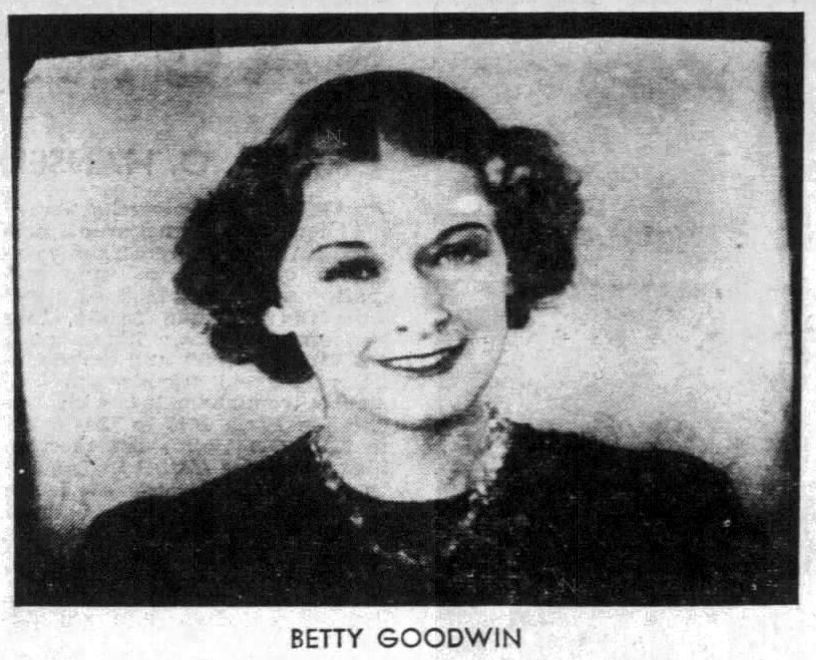 Live television was still pretty awkward in the latter half of the 1930s, when NBC was testing its electronic system.

 Yet, despite these money handicaps, many commentators already are foreseeing television as a billion dollar industry when it gets going.
  Television to Be Demonstrated
  Filing of the application followed the designation CBS of Paul W. Keston, vice-president and a general executive of the company, as official in charge of television development and preparation. In its decision to experiment with high-frequency television, CBS proposes to invade a field in which its chief competitor, NBC, has been engaged through its parent company, RCA. NBC has been conducting daily television experiments from atop the 1248 ft. Empire State Building, as well as in the Camden laboratories of RCA, using 441 line pictures. Philco Radio & Television Co. also is experimenting with 441-line images.


